Показаны сообщения с ярлыком in English. Показать все сообщения

понедельник, 8 февраля 2021 г.

The list of officials who petitioned to Cao Cao to accept the title of the duke of Wei after he initially declined

Xun You ( 中军师陵树亭侯荀攸 )
Zhong Yao (前军师东武亭侯钟繇)
Liang Mao (左军师凉茂)
Mao Jie ( 右军师毛 ) ?
Liu Xun ( 平虏将军华乡侯刘勋 )
Liu Ruo ( 建武将军清苑亭侯刘若 )
Xiahou Dun ( 伏波将军高安侯夏侯 )
Wang Zhong ( 扬武将军都亭侯王忠 )
Liu Zhan ( 奋威将军乐乡侯刘展 )
Xianyu Fu ( 建忠将军昌乡亭侯鲜于辅 )
Cheng Yu ( 奋武将军安国亭侯程昱 )
Jia Xu ( 太中大夫都乡侯贾诩 )
Dong Zhao ( 军师祭酒千秋亭侯董昭 )
Xue Hong ( 都亭侯薛洪 )
Dong Meng ( 南乡亭侯董蒙 )
Wang Can ( 关内侯王粲 )
Chuan Yi ( 传异 ) ?
Wang Xuan ( 祭酒王选 )
Yuan Huan ( 袁涣 )
Wang Lang ( 王朗 )
Zhang Cheng ( 张承 )
Ren Fan ( 任藩 )
Du Xi ( 杜袭 )
Cao Hong ( 中护军国明亭侯曹洪 )
Han Hao ( 中领军万岁亭侯韩浩 )
Cao Ren ( 行骁骑将军安平亭侯曹仁 )
Wang Tu ( 领护军将军王图 )
Wan Qian ( 长史万潜 )
Xie Huan ( 谢奂 )
Yuan Ba ( 袁霸 )
and others 

The full text of the petition (in Chinese) is under the cut:

The Book of Rites: Early Education and Gender Differentiation

When the child was able to take its own food, it was taught to use the right hand. When it was able to speak, a boy was taught to respond boldly and clearly; a girl, submissively and low. The former was fitted with a belt of leather; the latter, with one of silk.

At six years, they were taught the numbers and the names of the cardinal points; at the age of seven, boys and girls did not occupy the same mat nor eat together; at eight, when going out or coming in at a gate or door, and going to their mats to eat and drink, they were required to follow their elders: the teaching of yielding to others was now begun; at nine, they were taught how to number the days. At ten, the boy went to a master outside, and stayed with him even over the night. He learned the different classes of characters and calculation; he did not wear his jacket or trousers of silk; in his manners he followed his early lessons; morning and evening he learned the behavior of a youth; he would ask to be exercised in reading the tablets, and in the forms of polite conversation.

At thirteen, he learned music, and to repeat the odes, and to dance the civil dance of the Duke of Zhou. When a full-grown lad, he performed the martial dance of King Wu and learned archery and chariot-driving. At twenty, he was capped, and first learned the different classes of ceremonies and might wear furs and silk. He performed the Great Xia dance, and attended sedulously to filial and fraternal duties. He might become very learned, but did not teach others, his object being still to receive and not to give out. At thirty, he had a wife, and began to attend to the business proper to a man.

A girl at the age of ten ceased to go out from the women's apartments. Her governess taught her the arts of pleasing speech and manners, to be docile and obedient, to handle the hempen fibers, to deal with the cocoons, to weave silks and form fillets, to learn all woman's work, how to furnish garments, to watch the sacrifices, to supply the liquors and sauces, to fill the various stands and dishes with pickles and brine, and to assist in setting forth the appurtenances for the ceremonies.

At fifteen, she assumed the hair-pin; at twenty, she was married, or, if there were occasion for the delay, at twenty-three. If there were the betrothal rites, she became a wife; and if she went without these, a concubine.

http://chnm.gmu.edu/cyh/primary-sources/194

The lineage of the Tang imperial house and its problems

Source: From Barbarians to the Middle Kingdom: The Rise of the Title "Emperor, Heavenly Qaghan" and Its Significance. By Han-je Park (pdf)

By the time of the Sui-Tang era, a person’s culture played a more important role than his race. The ethnic origin of the Yang (楊) clan of the Sui and the Li clan of the Tang did not have much to do with their policies. They might well have descended from prominent Han families, but it is certain that these clans, a few generations back from the dynastic founders, had lived in the Wuchuan garrison, north of Yinshan (陰山) mountain for quite a long period of time. This historical fact seems to have given rise to the suspicion that the Sui and Tang imperial houses were of barbarian origin. 

The suspicion about the origin of the Li clan had existed from the very beginning of the dynasty, because they had once had the hu surname Daye (大野). The Buddhist monk Falin (法琳) declared before Taizong that the Tang imperial house originated from Xianbei Tuoba Dadu (達闍 i.e., Li in Chinese) which was a noble scion of Yinshan, i.e., a barbarian lineage. Although Taizong reprimanded Falin, during the war of unification an enemy, Dan Xiongxin (單雄信), called Taizong’s brother Yuanji (元吉) a hu child, and a Tang minister Sun Fuqie (孫伏伽) let slip that when Gaozu Li Yuan was a child his friends were all queue-haired because the royal family was deeply imbued with hu custom.

воскресенье, 7 февраля 2021 г.

Li Bi, from "Alchemists, Mediums, and Magicians: Stories of Taoist Mystics"

Из Alchemists, Mediums, and Magicians: Stories of Taoist Mystics, перевод Thomas Cleary.
Это сборник жизнеописаний 144 исторических лиц, связанных с даосизмом. Был составлен под названием "Сюаньпин лу" 玄品錄 даосом Чжан Тяньюем 張天雨 (1279-1350).
Li Bi was styled Changyuan. He originally lived in Demon Valley. At the age of seven he knew how to write compositions, and in 728 he was summoned to meet the emperor as an extraordinary child. He was most favored by Zhang Jiuling,(67) who called him his little friend.

When he grew up, he studied widely and became expert in the I Ching. He used to travel around to Mount Song, Mount Hua, and Mount Zhongnan, seeking the spiritual immortals’ art of not dying.

During the Tianbao era [742–755], he went to the imperial establishment and presented Proposal for Restoring the Yellow Emperor’s Nine Cauldrons. The emperor, considering him quick-witted, had him lecture on Lao-tzu. He had a command of the principles and obtained the position of attendant scholar.

He Zhizhang, from "Alchemists, Mediums, and Magicians: Stories of Taoist Mystics"

Из Alchemists, Mediums, and Magicians: Stories of Taoist Mystics, перевод Thomas Cleary.
Это сборник жизнеописаний 144 исторических лиц, связанных с даосизмом. Был составлен под названием "Сюаньпин лу" 玄品錄 даосом Чжан Тяньюем 張天雨 (1279-1350).
He Zhizhang was a man of Yongxing in Huiji. He was already famous for his writing in youth, nominated for advanced scholar, and with the recommendation of Lu Xiangxian(88) he was promoted from doctor of the National Academy to doctor of court ceremonial, then through successive posts up to vice director of the Ministry of Rites, plus scholar of the Institute for Assembling Savants; and he also served as attendant reader to the crown prince.

In 725, when Emperor Xuanzong was going to perform rites dedicated to heaven on Mount Tai, he ordered Zhizhang to explain the ritual. So he reported, “The sky god, the Lord on High, is in the position of the ruler; the Five Lords of the five directions are in the position of subjects. While the designations of the lords vary, ruler and subjects still differ in rank. Your Majesty sacrifices in the position of the ruler on the altar, while the ministers sacrifice in the position of subjects below the altar. In truth this is enough to send a message to future generations; it is an important, exceptional rite. Now the ritual is consummated with three offerings, and the ranks ultimately join in one place.”

Li Bo, from "Alchemists, Mediums, and Magicians: Stories of Taoist Mystics"

Из Alchemists, Mediums, and Magicians: Stories of Taoist Mystics, перевод Thomas Cleary.
Это сборник жизнеописаний 144 исторических лиц, связанных с даосизмом. Был составлен под названием "Сюаньпин лу" 玄品錄 даосом Чжан Тяньюем 張天雨 (1279-1350).

Li Bo was styled Taibo. He was a man of Shandong. He had extraordinary talent in youth; he was broad-minded and free-spirited, detached, with a mind beyond the world.

His father was commandant of Rencheng, so he made his home there.

Bo was perceptive. When he was traveling in Bingzhou, he recognized Guo Ziyi, king of Fenyang, in the army and called him a man among men.

Yet his inclination was to admire the arts of the Way, and he considered it possible to attain spiritual immortality. He wouldn’t read books that were not by sages and was ashamed to compose licentious works, so his words often resembled the expressions of celestial immortals. He has been called the greatest poet in history since the classical era.

пятница, 22 января 2021 г.

Courtesans as flowers: Song Dynasty poetry

From The Drunken Man's Talk: Tales from Medieval China by Luo Ye, translated by Alister D. Inglis and Wilt L. Idema
When Qiu Langzhong governed Jian’an,1 he counted Weng Yuanguang among his coterie. Accordingly, whenever there was a banquet, Weng was certain to be invited. Since all of Qiu’s courtesans poured the wine on such occasions, Weng gained a thorough knowledge of their looks as well as of their artistic and musical talent. He therefore chose a flower to symbolize the characteristics of each. While his poems have their strengths and weaknesses, each is founded on reality. Indeed, people were quick to circulate them. I have therefore arrayed them below.2
1 The famous Tang poet Yao He (c. 779–846) wrote a heptasyllabic quatrain entitled “To Qiu Langzhong.” This suggests that the recipient of Yao’s poem might have been the same person referred to in the current text. If so, Luo Ye again transcribed Tang material in this chapter. For the text and title of Yao’s poem, see Quan Tang shi, 497: 88.

2 What follows are poems of the yongwu genre. Such poems would take something from the phenomenal world as their subject, frequently a type of flower or other flora, without directly alluding to it; often only the title would indicate the subject. In this chapter, each poem is prefaced with the name of the courtesan to whose characteristics it alludes and sometimes a brief explanation of the metaphorical device. It would, nevertheless, have been unusual for any one scholar-official to have kept such a large number of concubines. If the authorial introduction is reliable, many of the women either may have been hired on an occasional basis or else may have been courtesans in government service.

Wu Ji: Red Plum Blossoms (alluding to her being queen of all the flowers due to incomparable purity)

Swelling cloud that looks so light; the snow seems spotless.
Jade and jasper both have mellowed; the moon has living essence.
Loathe to boast of beauty that equals the peach and plum,
The first child of spring alone to the mortal world has come.


Yang Qian: Narcissus (alluding to her airy and ripe fairy’s figure; she is considered second-in-line to the queen of flowers)

Soon to take on dusty form are silken stockings light,
Rippling gossamer gowns reflect in the water bright;
A gorgeous floral bloom that from the Luo has come,3
It concedes not in dignity to its brother plum.
3 The Luo referred to here is the Luo River.

вторник, 17 ноября 2020 г.

Tang Dynasty, from "China’s Cosmopolitan Empire. The Tang Dynasty" by Mark Edward Lewis

The Tang dynasty as the Golden Age of China

Most Chinese regard the Tang dynasty (618–907) as the highpoint of imperial China, both politically and culturally. The empire reached its greatest size prior to the Manchu Qing dynasty, becoming the center of an East Asian world linked by religion, script, and many economic and political institutions. Moreover, Tang writers produced the finest poetry in China’s great lyric tradition, which has remained the most prestigious literary genre throughout Chinese history. But like most other dynasties that endured for centuries, this was also an age of transformation. The world at the end of the Tang was quite different from what it had been at the beginning, and the dynasty’s historical importance is a consequence of the changes that took place during that time.

The military conquests and brilliant poetry that Chinese have traditionally celebrated occurred in the first half of the Tang dynasty. The imperial court never recovered from a cataclysmic rebellion in the middle of the eighth century, and within a few decades Chinese statesmen and authors were already writing of a golden age in whose shadow they now dwelled. 

Glorification of the Tang’s early achievements in politics and art increased in later dynasties. With all of China or its northern half controlled by non-Chinese peoples for most of the empire’s subsequent history, the Tang became the last great “Chinese” dynasty. This idea (which dismissed the militarily weak Ming dynasty) ignores the fact that the Tang ruling house was—both genealogically and culturally—a product of the frontier “barbarian” culture that dominated northern China in the fifth and sixth centuries.

суббота, 12 октября 2019 г.

Eunuchs during the Later Han (From Rafe de Crespigny’s "Fire over Luoyang")


“Eunuchs guarded the private areas, with the Prefect of the Yellow Gates – so-called for the colour of the entryways – controlling access to the emperor’s apartments and the Prefect of the Lateral Courts supervising the harem. Palace eunuchs were formally responsible to the Minister Steward, but as a full man he had limited direct control, and in practice the eunuchs had a hierarchy of their own, headed by Regular Attendants and Attendants at the Yellow Gates, who were largely independent of the regular bureaucracy and were often close confidants and agents of the emperor.”


“The picture of imperial eunuchs in China is confused by the disdain held for them by Confucian gentry and scholars, who resented the high position held by such emasculated creatures, unable to perform the essential duty of maintaining ancestral worship into future generations. Since the time of Sun Cheng during the reign of Emperor Shun, eunuchs had been authorised to adopt sons and even daughters, and the children thus acquired could inherit their property and their titles, but conservative men discounted the value and effect of such adoption. As a consequence of this hostility, reflected by later historians, eunuchs have generally been regarded as creatures of mean quality, greedy holders of illegitimate power, outside the main stream of community.

воскресенье, 29 июля 2018 г.

“Ivan the Terrible as Renaissance Prince” by Michael Cherniavsky. Slavic Review, 1968, p.195-211

Иван Грозный. Со старинной немецкой гравюры на дереве. XVI в.

The image of the "Terrible Tsar" struck the imagination of his contemporaries with such force that it continued to tower in Russian consciousness until quite recent times. In chronicles and tales, folk songs and stories, and in historiography from Karamzin on, Ivan IV remained alive, more vivid even than Peter the Great. And the impact was not restricted to Russians; beginning with the Dutch, English, Italians, Danes, and Germans - adventurers, diplomats, merchants, prisoners, mercenaries, who visited the Russia of Ivan IV - the Tsar left an impression in West European minds such that today men who know nothing about Russia or its history will know the name of Ivan the Terrible.

The essence of the image seems to be conveyed by the epithet earned by Ivan. Certainly in modern Western Europe der Schreckliche, the Terrible, the Dread, le Terrible, or il Terribile evokes endless executions, tortures, arbitrary and overwhelming terror, a historical landscape bathed in blood and ruled by a monstrous tyrant. And, in the final analysis, for Russian historians, too, Groznyi meant the same things. Debate and discussion about the significance and direction of Ivan’s policies, and of his reign in general, are still going on, more vigorously than ever before, but from Karamzin in 1818 to Veselovskii and Zimin today the historians have tended to stumble over this epithet and then hold on to it; whatever one fails to explain about Ivan or any of his actions, there is always that personal epithet to fall back on, the epithet which symbolizes sadism, or pathological fear, or sheer madness - but in any event, the irrational, beyond or outside cultural or social patterns.

It would be foolish to argue that the personality of Ivan IV is irrelevant for an understanding of his reign, that is, his actions and policies. Recently, in fact, we have come into possession of very concrete evidence which may explain the monstrous aspects of Ivan’s personality: the results of the study of Ivan’s skeleton, removed from the tomb in the Arkhangel'skii Cathedral some three years ago, show that he must have suffered horribly for many years from osteophytes, which virtually fused his spine. But the personality of Ivan does not explain sufficiently the image of the "Terrible Tsar", for at least two reasons. First, the epithet Groznyi, the Terrible, did not have the meaning which is assigned to it now. And, second, Ivan the Terrible seems to have lived in an age of "terrible" rulers: Richard III and Henry VIII in England, Louis XI in France, Philip II in Spain, Sigismondo Malatesta in Rimini, Cesare Borgia and his father Pope Alexander VI, Christian II of Denmark; all of them were monstrous and terrible, and all of them, virtually at the same time, seem too much of a coincidence.

пятница, 22 июня 2018 г.

Biography Compilation: Xun You 荀攸 (Gongda 公達), 157–214


Your humble servant compiled this biography using quotes from different sources: Sanguozhi, "To Establish Peace", etc. When several sources contained more or less the same information about the same event I chose the one with a fuller depiction. In case of conflicting sources or complementary data I put them into parallel columns. At the end of each quote the source is specified in []. All sources are listed at the bottom of the page. Cursive text - my commentaries. 


Xún Yōu 荀攸, styled Gōngdá 公達, was [Xún] Yù’s second cousin’s son. His grandfather [Xun] Tán was Administrator of Guǎnglíng. [1]
The Xun family tree can be found here
[Xun] Yōu’s father [Xún] Yí was a Provincial Advisor. [Xún] Yí and [Xún] Yù 彧 were second cousins. [1] 

Wèishū states: At the time of Jiàn'ān nineteenth year [214], [Xun] Yōu was aged fifty-eight. One can can calculate he was older than Yù by six years. [1] 

[Xun] Yōu was orphaned when young. [1] 

Wèishū states: When Yōu was aged seven to eight years, [Xún] Qú became very intoxicated and accidentally injured Yōu’s ear. When Yōu went out and played, he hid it so Qú would not be discovered. Later Qú heard of this, and so was astonished he was early matured like this.[1]
Xun Qu - Xun You's uncle
When Tán died, his former clerk Zhāng Quán asked to guard his tomb. Yōu was aged thirteen, doubted him, and said to his father’s younger brother [Xún] Qú: “This clerk has an unusual countenance, and is probably planning some treachery.” [Xún] Qú in the night woke and interrogated him, and indeed found he had killed someone and was fleeing in exile. From this people saw [Xún Yōu] was special. [1]

суббота, 13 мая 2017 г.

Non est magnum ingenium sine mixtur dementiae


Sergei Eisenstein's Ivan the Terrible is far more than a historical biopic about the first Russian tsar. Instead, it is a deeply stylized, symbolic tragedy, drawing from theatrical traditions and Shakespearean plays such as Hamlet and Macbeth. Eisenstein deliberately distorts historical accuracy in favor of artistic expression, creating a multi-layered narrative that invites endless interpretations. From its operatic performances and abstract visuals to its exploration of power, tyranny, and human fallibility, Ivan the Terrible is a timeless parable that challenges viewers to look beyond the historical Ivan IV and into the universal themes of ambition, cruelty, and isolation.

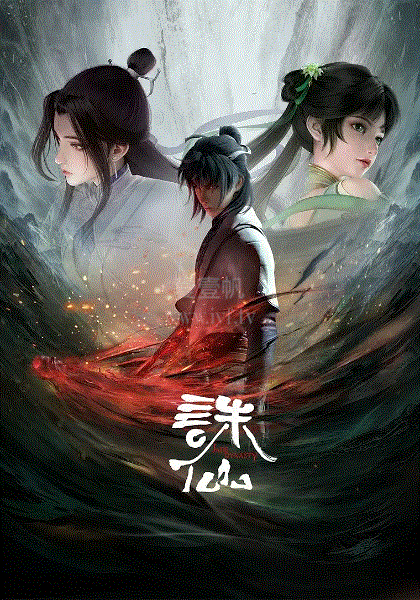
"Чжусянь" / "Кара бессмертных" / 诛仙 / "Легенда о Чусэнь" / "Jade Dynasty" / "Нефритовая династия"

Роман "Чжусянь" Сяо Дина 萧鼎  повествует о Чжан Сяофане - очередном обычном мальчике, жизнь которого резко меняется после загадочно...